# Unlocking India's Next Big Hit: Data-Backed Food Business Ideas for 2026 and Beyond
By Gavish Goyal, Founder, The Belgian Waffle Xpress
Starting a food business in India in 2026 requires more than just a good recipe; it demands a data-driven approach to profitability, scalability, and navigating a complex regulatory landscape. This guide offers an operator's perspective on identifying successful ventures, understanding unit economics, and setting up for long-term growth, drawing insights from our experience building The Belgian Waffle Xpress.
What Makes a Food Business Idea Profitable and Scalable in India Today?
Profitability and scalability in the Indian food sector hinge on a few core pillars that often get overlooked by first-time entrepreneurs. The most critical factor is understanding your target demographic's purchasing power and willingness to spend on your specific offering, a point often missed in generic business advice. For instance, while fine dining might seem aspirational, the sheer volume of daily transactions in the Quick Service Restaurant (QSR) segment, especially in Tier-2 and Tier-3 cities, presents a more consistent revenue stream for many. A report by IMARC Group highlights the Indian food service market's projected growth to USD 127.2 billion by 2028, driven by changing consumer lifestyles and increasing disposable incomes, particularly in the mid-market segment (IMARC Group, 2023). Scalability isn't just about opening more outlets; it's about having a replicable operational model, a robust supply chain, and a brand that resonates across different locations. For brands like The Belgian Waffle Xpress, scalability meant standardizing our waffle recipes and operational processes across 39 outlets, ensuring a consistent customer experience regardless of the city. This focus on operational efficiency, rather than just product uniqueness, is what allows a business to grow from a single unit to a multi-location chain. Furthermore, adapting to local tastes while maintaining brand identity is crucial; a business that rigidly sticks to a single offering without considering regional preferences might find its growth stunted.
Top High-Growth Food Business Ideas for the Indian Market (2026-2030)
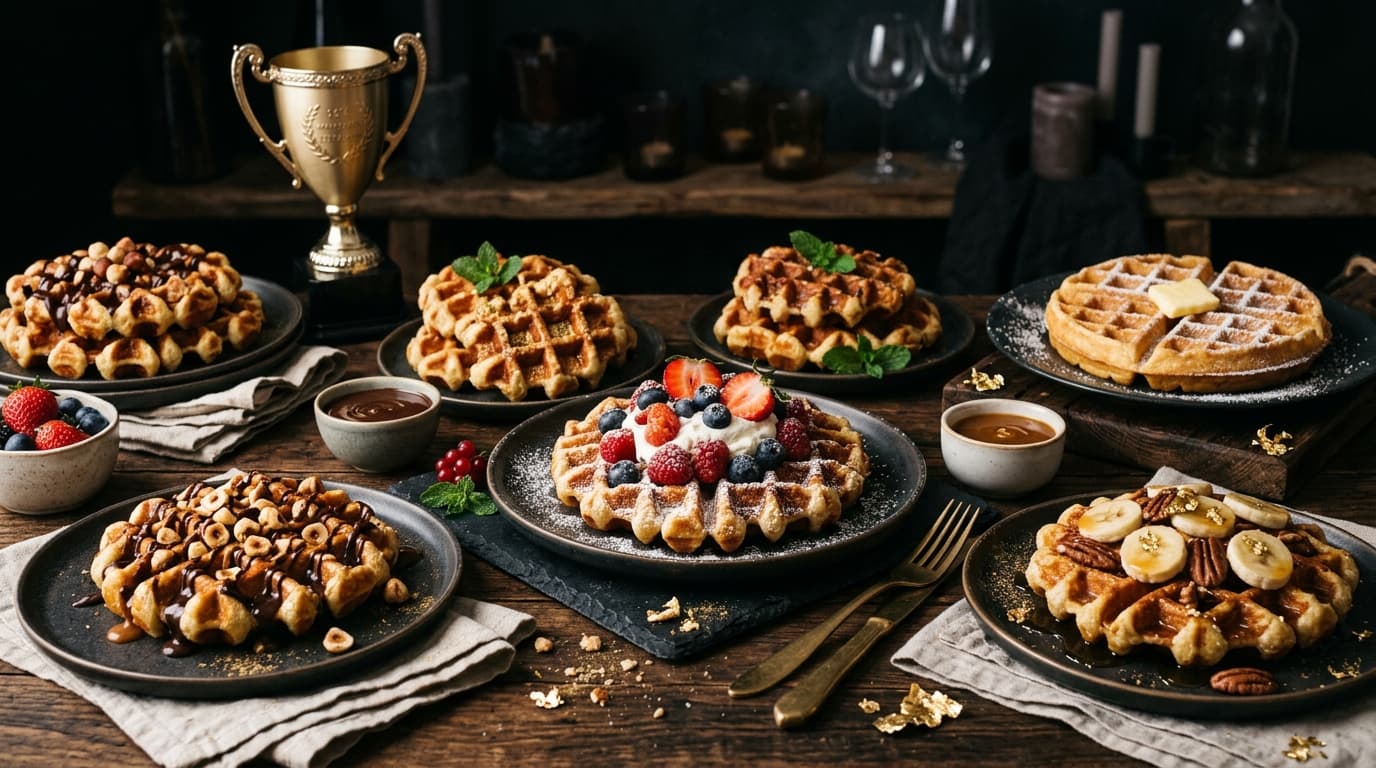
Identifying high-growth food business ideas in India requires looking beyond fleeting trends and focusing on evolving consumer habits and market gaps. One area showing significant promise is the specialized dessert segment, particularly items that offer an indulgent yet accessible experience. Belgian-style waffles, for example, have carved out a strong niche, offering a versatile product that can be served sweet or savory, catering to a broad customer base. The Belgian Waffle Xpress, which started operations in 2020, has grown to 39 outlets by focusing on this specific product, demonstrating its appeal across various Indian cities. Another high-growth area is healthy and organic food options, a segment projected to expand significantly as health consciousness rises. Statista data indicates a growing consumer preference for healthier food choices, with the organic food market in India expected to reach USD 2.5 billion by 2027 (Statista, 2023). This could manifest as specialized cafes, meal prep services, or even packaged healthy snacks. Cloud kitchen models also continue to be a significant growth driver, allowing entrepreneurs to test concepts with lower overheads. Services that offer curated regional Indian cuisines or fusion food experiences are also gaining traction, tapping into India’s diverse culinary landscape. The key for any of these ideas is to have a clear value proposition and a solid understanding of the target market's needs and preferences.
Franchising vs. Independent: A Deep Dive into Food Business Models in India
Choosing between a franchise and an independent food business is a foundational decision with long-term implications for profitability and operational ease. A franchise model, like the one offered by The Belgian Waffle Xpress, provides a proven business system, established brand recognition, and ongoing support, which can significantly de-risk the venture for new entrepreneurs. Our franchise model, for instance, requires an all-in investment typically ranging from ₹4 to ₹7 Lakhs and includes access to our standardized operating procedures, supply chain, and marketing strategies. This can lead to a faster break-even period, often between 8 to 14 months, as franchisees benefit from an established customer base and operational blueprint (The Belgian Waffle Xpress). On the other hand, an independent business offers complete creative control and the potential for higher profit margins if successful, as there are no royalty fees (typically 5% + GST for brands like ours). However, building a brand from scratch, developing operational systems, and navigating market entry are significantly more challenging and capital intensive. An independent venture requires extensive market research, product development, and a strong understanding of local consumer preferences to gain traction. While the allure of complete ownership is strong, the data suggests that for many aspiring food entrepreneurs in India, the structured support and proven model of a reputable franchise can be a more reliable path to profitability, especially in competitive urban markets.
Real-World Unit Economics: What It Takes to Make Money in Indian Food QSRs
Understanding the unit economics is paramount for any food business aiming for genuine profitability, not just revenue. For Quick Service Restaurants (QSRs) in India, the core metrics revolve around food cost, labor cost, rent, and sales volume. A common benchmark for food cost is to keep it between 25-35% of the selling price. For The Belgian Waffle Xpress, maintaining this percentage across our diverse menu, from signature waffles to savory options, is a constant focus, ensuring that ingredient costs don't erode margins. Labor costs typically range from 15-25% of revenue. Our model often requires just 1-2 staff members per outlet, which helps keep this manageable, particularly in smaller formats like kiosks. Rent is arguably the most variable and critical expense; it should ideally not exceed 10-12% of your monthly revenue. This is why location selection is so vital; a high-footfall area might command higher rent, but the increased sales volume needs to justify it. As an operator, I constantly look at the P&Ls to ensure that revenue generated from sales volume consistently covers these fixed and variable costs, leaving a healthy profit margin. A typical QSR aiming for profitability needs to achieve a certain daily sales volume to cover its operating expenses. For example, if a waffle costs ₹150 to make and sells for ₹300, the gross profit is ₹150. To cover daily overheads of ₹5,000 (rent, electricity, salary), you'd need to sell at least 34 units of that waffle daily, excluding any initial investment recovery. This is the 'kirana-level economics' that underpins every successful food outlet.
Navigating FSSAI, GST, and Local Licenses for Your Indian Food Startup
Securing the necessary licenses and registrations is a non-negotiable step for any food business in India, and understanding this process early can prevent costly delays and legal issues. The primary regulatory body is the Food Safety and Standards Authority of India (FSSAI), which mandates a Food Business License or Registration (Form A for turnover below ₹12 Lakhs, Form B for higher turnovers) for all food businesses. This license ensures compliance with food safety and hygiene standards, a critical aspect for consumer trust and public health. Obtaining an FSSAI license is a foundational step, and the specific requirements depend on the scale and nature of your operation (FSSAI, n.d.). Alongside FSSAI, Goods and Services Tax (GST) registration is mandatory for businesses with an annual turnover exceeding ₹20 Lakhs (₹10 Lakhs in special category states). Registering for GST allows you to collect tax from customers and claim input tax credits, which is essential for managing cash flow. Beyond these national registrations, local municipal licenses are often required, varying by city and state. These can include a Shop and Establishment Act license, a Trade License, and sometimes specific health or fire department clearances, especially for dine-in establishments. For The Belgian Waffle Xpress, ensuring each of our franchisees has all these local compliances in order is part of our onboarding process, as operating without them can lead to penalties, business interruption, or even closure. Navigating this complex web of regulations requires diligence, and consulting with a local legal or compliance expert can be invaluable.
Validating Your Food Business Idea: Market Research and Pilot Strategies for India
Before investing significant capital, thoroughly validating your food business idea through market research and pilot testing is crucial, especially within the diverse Indian market. This isn't just about asking friends if they like your product; it's about gathering objective data on demand, competition, and pricing sensitivity. For a concept like The Belgian Waffle Xpress, initial market research involved analyzing existing dessert consumption patterns and identifying a gap for high-quality, accessible Belgian-style waffles. We looked at footfall in potential locations and observed consumer behavior around existing dessert shops. A pilot strategy is the next logical step. This could involve operating a small cloud kitchen to test menu items and delivery demand, or setting up a pop-up stall at a local market or event to gauge direct customer feedback and sales volume. For example, before committing to a full-fledged franchise rollout in a new city, we often conduct preliminary surveys and analyze competitor offerings in that specific geography. This allows us to tailor our approach, understanding local preferences and potential challenges. A successful pilot phase provides real-world data on sales, operational efficiency, and customer satisfaction, forming the basis for a more confident scale-up or necessary pivots before a larger investment.
Founder's Note
When I started The Belgian Waffle Xpress, I learned that passion for food needs to be matched with a rigorous understanding of business. It's about more than just great waffles; it's about creating a sustainable model that works for our franchisees and our customers. Data, location, and operational efficiency are the real ingredients for success.
Frequently Asked Questions
Q1: What is the most profitable food business idea in India? The most profitable food business idea in India often depends on market demand, operational efficiency, and scalability rather than a single category. Businesses focusing on high-volume, low-overhead models like specialized QSRs (e.g., waffles, momos, biryani bowls), cloud kitchens, or healthy meal services tend to show strong profitability. Brands like The Belgian Waffle Xpress have found success by focusing on a niche product with broad appeal.
Q2: How much capital is needed to start a small food business in India? Capital requirements vary significantly. A small food business, such as a basic cloud kitchen or a kiosk model like some of TBWX's formats, can range from ₹3 Lakhs to ₹7 Lakhs, covering setup, initial inventory, and licenses. Larger formats, cafes, or restaurants can cost anywhere from ₹15 Lakhs to ₹50 Lakhs or more, depending on location, seating, and brand positioning.
Q3: What licenses are required for a food business in India? The essential licenses include an FSSAI Food Business License/Registration, GST Registration (if turnover exceeds ₹20 Lakhs annually), and local municipal licenses such as a Shop and Establishment Act license and a Trade License. Specific requirements can vary by state and city, and it's advisable to consult local authorities or experts.
Q4: Is a food truck business profitable in India? Food trucks can be profitable in India, offering lower startup costs compared to brick-and-mortar outlets and flexibility in location. Profitability depends heavily on strategic location selection, menu appeal, efficient operations, and obtaining necessary permits, which can sometimes be complex. Brands that can leverage high-footfall events and areas often see good returns.
Q5: What are the top food trends for startups in India? Current top food trends for startups include healthy and plant-based options, artisanal and gourmet street food, fusion cuisine, specialized dessert concepts (like Belgian waffles), and the continued growth of cloud kitchens for delivery-focused models. Consumers are also increasingly seeking unique culinary experiences and convenient, high-quality meals.
Q6: How can I find funding for my food startup in India? Funding can be secured through several avenues: personal savings, loans from banks or NBFCs (often requiring a solid business plan and collateral), angel investors, venture capital firms (for scalable concepts), government schemes like the Pradhan Mantri Mudra Yojana, and crowdfunding platforms. Demonstrating a clear path to profitability and scalability is key to attracting investors.