Back to Blog
Franchise Guide

Waffle Franchise vs Pizza, Biryani, Chai: Which Food Franchise Actually Makes You More Money?

Thinking about a food franchise but confused between waffles, pizza, biryani, and chai? We compare investment, margins, complexity, and ROI across India's most popular franchise categories.

TBWX TeamMarch 31, 202613 min read
Waffle Franchise vs Pizza, Biryani, Chai: Which Food Franchise Actually Makes You More Money?

You have decided you want a food franchise. Smart choice. The food service industry in India is worth Rs 5.99 lakh crore and growing. But now you are stuck on the next question: which food category?

Pizza? Biryani? Chai? Waffles? Momos? Each one has a pitch. Each one has success stories. And each one has franchise salespeople telling you their model is the best.

This guide cuts through the noise. We are going to compare the five most popular food franchise categories in India on the metrics that actually matter: investment, profit margin, operational complexity, scalability, and ROI timeline.

No, we are not going to pretend this is unbiased. We run a waffle franchise. But we are going to give you honest numbers for every category so you can make your own decision.

The Five Categories We Are Comparing

Investment Comparison

This is where the differences start getting real.

### Waffles (Rs 3-15 lakh)

The lowest entry point of any branded food franchise. A TBWX kiosk starts at Rs 3 lakh. Even the premium brands in this category (Belgian Waffle Co) cap out around Rs 9 lakh. Equipment is simple: waffle makers, a fridge, and a display counter. No exhaust systems, no tandoor, no pizza oven.

### Pizza (Rs 10-30 lakh)

Pizza franchises are expensive because the equipment demands are high. A pizza oven alone costs Rs 2-4 lakh. Add dough preparation equipment, walk-in refrigeration, and the large kitchen space needed, and you are looking at Rs 15 lakh minimum for a serious operation. Budget pizza brands exist at Rs 10 lakh, but they struggle with quality consistency.

### Biryani (Rs 8-20 lakh)

Biryani requires skilled cooks. That is both the appeal and the problem. Your profit depends heavily on finding and retaining a cook who can maintain consistency. Equipment includes heavy-duty burners, large cooking vessels (degchis), and proper ventilation. Cloud kitchen models start lower at Rs 8 lakh.

### Chai (Rs 5-15 lakh)

Chai franchises have moderate equipment needs. Brewing machines, water purifiers, and a small seating area. The investment is reasonable, but margins are squeezed by low ticket sizes (Rs 30-80 per cup). You need high volume to make the maths work.

### Momos (Rs 3-10 lakh)

Similar investment range to waffles. A steamer-based operation is simple and affordable. But momos face a perception ceiling. They are seen as street food, which limits how much you can charge. Premium momo brands are trying to change this, but the average customer still expects momos at Rs 60-80.

Profit Margins: Where the Real Comparison Happens

A few things jump out:

Chai has the best gross margin but the worst ticket size. You need to sell 50 cups to match what a waffle kiosk earns from 10 customers. Volume dependency makes chai franchises risky in low-footfall locations.

Biryani has the worst food cost. Rice, meat, and spices at consistent quality are expensive. And biryani requires portion sizes that customers expect. You cannot serve a small portion of biryani the way you can adjust waffle toppings.

Waffles have the best balance. Strong gross margins (68-72%), a high enough ticket size (Rs 150-250) to generate revenue without needing massive volume, and low food cost variability because the core ingredients (flour, eggs, milk) are price-stable.

Pizza margins are decent but eaten by overheads. Larger space, more staff, higher electricity costs, and expensive equipment maintenance reduce the net margin significantly.

Operational Complexity

This is the factor most first-time franchise owners underestimate. Running a food business is daily, physical work. The simpler the operation, the better your quality of life.

### Waffles: Low complexity

Prep time per item: 3-5 minutes

Staff needed: 1-2 people

Skill level: Basic training (5-7 days)

Kitchen size: 80-150 sq ft for a kiosk

Exhaust/ventilation: Minimal (no deep frying, no tandoor smoke)

A waffle operation is about as simple as food service gets. Batter goes in, waffle comes out, toppings go on. There is no complex cooking technique, no temperature-sensitive preparation, and no multi-step recipes.

### Pizza: Medium-high complexity

Prep time per item: 10-15 minutes

Staff needed: 3-5 people

Skill level: Moderate (dough handling, oven management)

Kitchen size: 300-500 sq ft minimum

Exhaust/ventilation: Heavy (high-temperature oven)

### Biryani: High complexity

Prep time per item: 45-60 minutes (batch cooking)

Staff needed: 3-4 people including a skilled cook

Skill level: High (biryani is a skill-based dish)

Kitchen size: 200-400 sq ft

Exhaust/ventilation: Heavy (open flame, steam, spice smoke)

### Chai: Low-medium complexity

Prep time per item: 2-4 minutes

Staff needed: 2-3 people

Skill level: Low-moderate

Kitchen size: 100-200 sq ft

Exhaust/ventilation: Moderate

### Momos: Medium complexity

Prep time per item: 15-20 minutes (batch steaming)

Staff needed: 2-3 people

Skill level: Moderate (filling preparation, folding technique)

Kitchen size: 100-200 sq ft

Exhaust/ventilation: Moderate (steam)

The Instagram Factor

In 2026, this matters more than you think. Free organic marketing from customer-generated content is the most cost-effective growth channel for any food business.

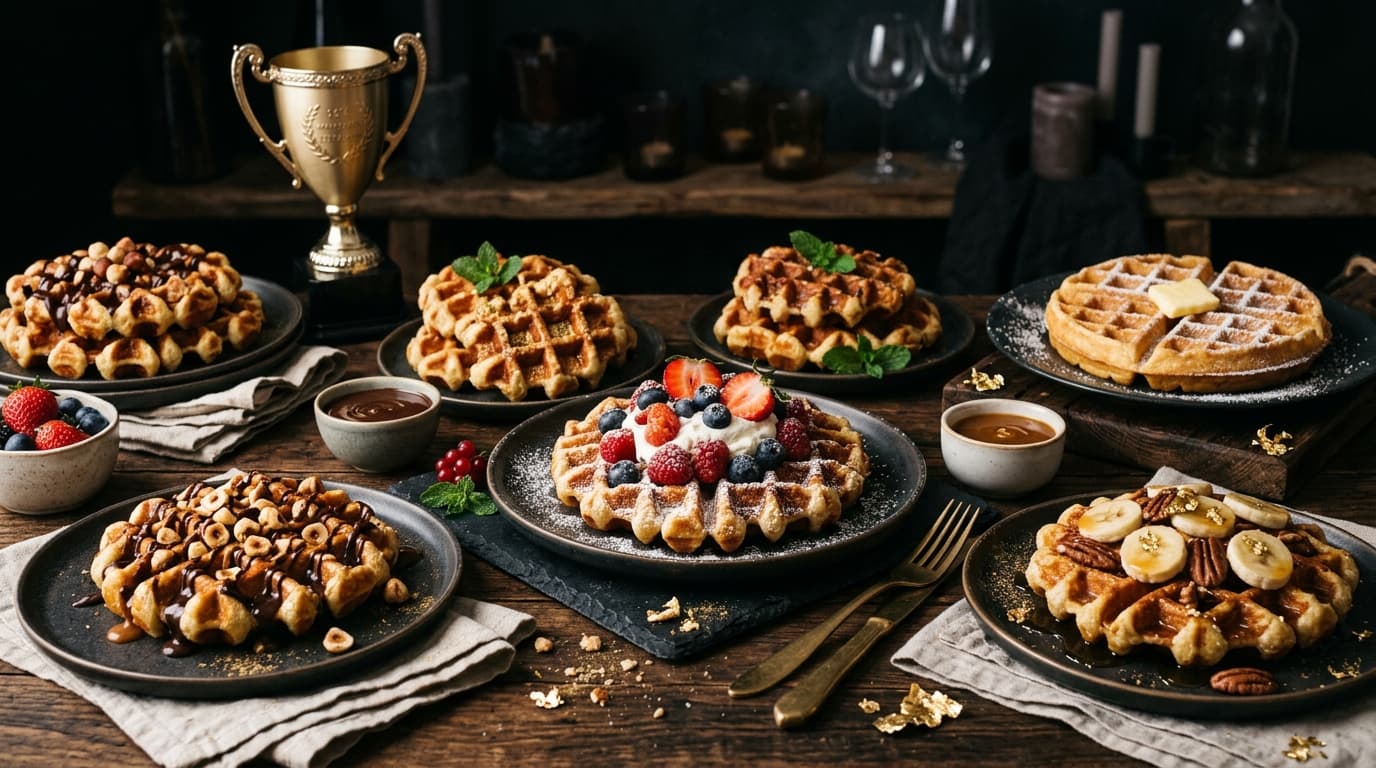
Waffles are inherently photogenic. A Belgian waffle loaded with Nutella, strawberries, and ice cream is an Instagram post waiting to happen. Your customers photograph their food, tag your location, and share it with their followers. This happens organically without you spending a single rupee on advertising.

Pizza is also photogenic but less novel. Everyone has seen a pizza photo. Biryani does not photograph particularly well (brown rice in a container is not Instagram gold). Chai is visually boring. Momos can look good but lack the colour pop of a loaded waffle.

This is not vanity. In cities like Chandigarh, Pune, and Lucknow, TBWX outlets report that 15-25% of new customers discovered them through Instagram posts by other customers. That is free customer acquisition worth Rs 10,000-20,000 per month in equivalent ad spend.

Scalability: Can You Build a Chain?

If your goal is one outlet, this section does not matter. But if you are thinking bigger, scalability matters a lot.

Biryani is the hardest to scale because quality depends on the cook. Lose your cook and your biryani changes. Waffles and chai are the easiest because the recipes are standardised and staff are easily trained.

ROI Comparison: The Number That Matters

Let us put it all together. For each category, here is a realistic scenario assuming a mid-range franchise brand and a decent location:

On a pure ROI basis, the waffle kiosk wins. Not because it earns the most in absolute terms, but because the investment is the lowest. Putting Rs 4 lakh in and getting Rs 5.4 lakh out in a year is a 135% return. No other food franchise category at this investment level comes close.

So Which One Should You Pick?

Here is the honest framework:

Pick waffles if: You want the lowest investment, fastest break-even, simplest operations, and strongest Instagram appeal. Ideal for first-time business owners, part-time operators, and anyone in a tier 2-3 city where branded dessert options are limited.

Pick pizza if: You have Rs 15+ lakh to invest, want to run a sit-down restaurant, and your location has high family traffic. Pizza has broader meal appeal (lunch + dinner) but higher complexity.

Pick biryani if: You have access to a skilled cook, want to run a cloud kitchen without a storefront, and your city has strong delivery demand. Not ideal for first-timers because of the cook dependency.

Pick chai if: You are in a high-footfall area (railway station, bus stand, office complex) where volume selling is possible. Not recommended for areas with less than 500 people passing per hour.

Pick momos if: You want a low-investment street food play. Good margins but limited premiumisation potential. Works best as a cart model in north Indian cities.

The Verdict

Every food franchise category can work. The question is which one matches your budget, your risk tolerance, and your location.

For most first-time franchise owners with Rs 3-5 lakh to invest, waffles offer the best risk-adjusted return. Low complexity, high margins, strong social media pull, and a break-even timeline that lets you recover your investment in under a year.

That does not mean waffles are the answer for everyone. If you have Rs 20 lakh and a 2,000 sq ft space, a pizza franchise might be your better play. Context matters.

But if you are reading this article comparing options at the Rs 3-10 lakh investment range, the numbers consistently favour waffles.

[Explore TBWX franchise opportunities](/franchise) or [apply to check availability in your city](/franchise/apply).

Related reading:

[Waffle Franchise Profit Per Month: Real Numbers](/blog/waffle-franchise-profit-per-month)

[Waffle Franchise Cost in India: Full Breakdown](/waffle-franchise-cost-india)

[How to Start a Waffle Franchise: Step-by-Step](/blog/how-to-start-waffle-franchise-india)

Ready to Start Your Own TBWX Outlet?

From just ₹3 Lakhs — full training, tech-enabled ops, and AI-driven automations included.

Apply for a Franchise