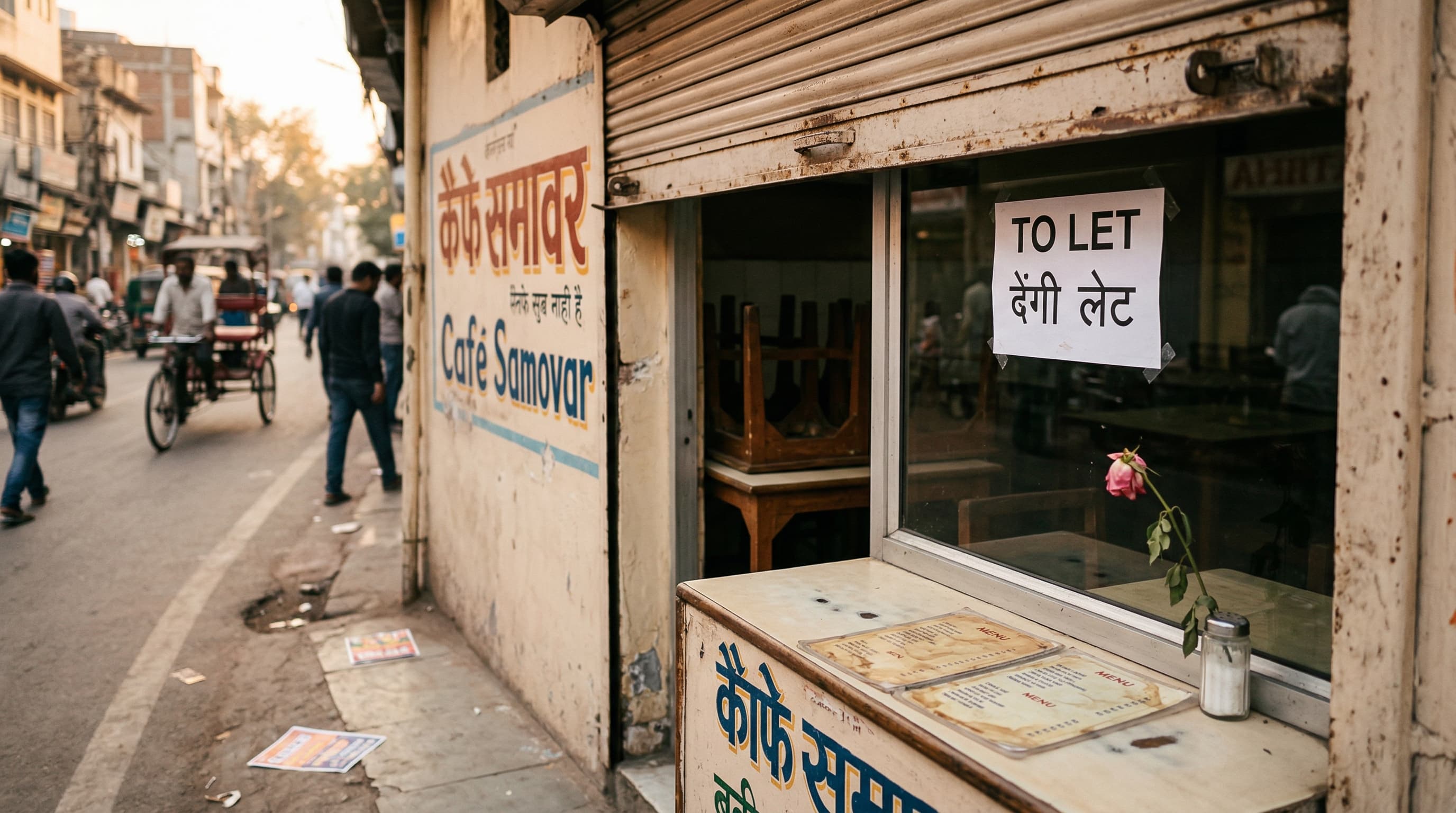
Last year, a Reddit post went viral in Indian business communities. The title said everything: "I lost 6 lakhs in my restaurant business in a month."
The comments were not surprise. They were recognition. Hundreds of people chimed in with their own versions of the same story. A cafe that opened with dreams and a loan, ran for four months, and closed with a freezer full of unsold inventory and a landlord asking for next month's rent.
This happens to somewhere between 60% and 80% of independent food businesses in India within the first year.
We are a waffle franchise brand. We have opened 67 outlets and most of our outlets are currently profitable. We did not get there because we are lucky or special. We got there because we obsess over the exact five reasons small cafes fail, and we have built our model specifically to remove as many of them as possible from the equation.
This is the honest autopsy.
Silent Killer 1: The Wrong Location (And the Lie of Cheap Rent)
Almost every failed cafe we have studied made the same mistake: they chose their location based on rent, not footfall.
A Rs 15,000/month shop in a quiet lane looks like a bargain compared to a Rs 40,000/month shop on a busy road. Most first-time owners take the cheaper one and plan to "drive footfall through marketing."
You cannot. Marketing does not make people walk down a road they have no reason to walk down. Marketing amplifies footfall that already exists. If your location has 20 people walking past per hour, you can double that to 40 with brilliant marketing. If it has 200 per hour, you can push it to 300. The difference between those two shops is not marketing. It is the location decision you made on day one.
What TBWX does differently: Every TBWX location is vetted by our operations team before we sign it. We have a non-negotiable footfall minimum (around 150-200 people/hour during peak), proximity checklist for colleges, IT parks, residential catchments, and visibility from the main road. If a potential franchisee picks a bad location, we say no, even if it means losing the deal. Our strong profitability rate is largely because we kill the other 20% of applications at the location stage.
Silent Killer 2: Raw Material Wastage You Cannot See
Food cost in a well-run small cafe should sit at 28-32% of revenue. In a struggling cafe, it is often 45-55%. That gap. Rs 15,000-30,000 per month on a Rs 1.5 lakh revenue outlet, is the difference between profit and closure.
Where does it go? Nowhere dramatic. It goes in tiny leaks:
A staff member pours a slightly bigger scoop of Nutella than the SOP says
Batter left overnight gets thrown out because nobody tracked the date
A brand new tub of Biscoff spread opens before the old one is finished
Three waffles are "tasted" by the staff every shift
Returns and rejects are not tracked, so nobody knows why revenue doesn't match orders
Independent cafe owners discover these leaks six months in, when their bank balance has already collapsed. By then, it is too late.
What TBWX does differently: Every TBWX outlet runs on a portion-control SOP. Waffles are weighed during training until muscle memory takes over. Biscoff, Nutella, chocolate sauce, all dispensed from pre-measured pumps. Daily inventory counts are a 90-second ritual. Our food cost averages 30% across outlets, with the best performers hitting 27%. That discipline is not native to the operator. It is something we train and audit.
Silent Killer 3: Over-Staffing for the Ticket Size
The second most common cafe budget line that quietly kills the business is labour.
A first-time cafe owner hires three people because it "feels right", one for cooking, one for billing, one for cleaning. They pay each person Rs 9,000 a month. That is Rs 27,000 of labour on an outlet doing Rs 1.5 lakh in revenue. 18% labour cost. Already, with food at 30%, rent at 12%, and utilities at 4%, the owner is spending 64% of revenue on fixed costs before touching any other expense.
Meanwhile, a well-designed dessert kiosk can run with one trained operator during lean hours and two during peaks. Labour cost drops to 10-12%, and that 6% savings is the entire net profit margin of the business.
What TBWX does differently: Our kiosks are engineered for a 1.5-person operation. One person can run an outlet for 70% of the day. During peaks, we add a second person for 3-4 hours. We actively discourage franchisees from over-hiring during launch excitement, and when we see labour creep above 13% in an outlet, our ops team steps in and audits the shift structure.
Silent Killer 4: Zero Repeat Rate
Most first-time cafe owners believe the business is about getting new customers. It is not.
A healthy dessert cafe should have 60-70% of its revenue come from repeat customers within six months. If every day you are chasing brand-new walk-ins, you are running a leaky bucket. You will burn out on marketing before you ever reach profitability.
Repeat rate is not about loyalty programmes or discount cards. It is about two things: a product people genuinely crave again, and small emotional touches that make the outlet feel like "their place." A greeting by name. A signature waffle their kid loves. A WhatsApp message on their birthday.
Independent cafes rarely build these. They are too busy trying to keep the kitchen running.
What TBWX does differently: Our brand is built around a product that has a genuinely high crave rate, fresh Belgian waffles with premium toppings. Our repeat rate across outlets averages 55-65% by month six. On top of that, every outlet is trained on small relationship rituals: remembering regulars, using WhatsApp to send "your favourite is ready" alerts, creating a community Instagram tag. It is not rocket science. It is consistent.
Silent Killer 5: The Discount Death Spiral
Here is how it ends for most failing cafes: sales are down, the owner panics, they run a 30% off weekend promo on Instagram and Zomato. Sales spike for two days. The owner feels relief.
Then Monday arrives and sales are worse than before. Because every customer who was going to pay full price that week waited for the discount. And they are now trained to wait for the next one.
The owner runs another promo. And another. Within three months, the cafe's default positioning is "the place with the discounts." Full-price sales collapse. The business cannot sustain its cost base on discounted revenue. It closes.
We have seen this loop play out in Pune, Bangalore, Chennai, and Lucknow. Same story, same ending.
What TBWX does differently: Our franchise agreement explicitly limits deep discounting. Outlets can run exactly two major promotions a year. Valentine's Day and National Waffle Day, and participate in platform-wide events approved by brand HQ. The rest of the year, we compete on consistency and product quality, not price. It feels restrictive to new franchisees at first. Six months in, every single one of them thanks us for it.
The Numbers That Separate Survivors From Casualties
Here is the P&L comparison between an average failing independent cafe and an average TBWX outlet at month 6, both doing roughly Rs 1.5 lakh in monthly revenue:
| Line Item | Failing Indie Cafe | TBWX Outlet |
|---|---|---|
| Revenue | Rs 1,50,000 | Rs 1,50,000 |
| Food cost | Rs 68,000 (45%) | Rs 45,000 (30%) |
| Labour | Rs 27,000 (18%) | Rs 18,000 (12%) |
| Rent | Rs 22,000 | Rs 18,000 |
| Discounts/promo loss | Rs 15,000 | Rs 3,000 |
| Aggregator net impact | Rs 18,000 | Rs 8,000 |
| Utilities, misc, royalty | Rs 10,000 | Rs 15,000 |
| Net Profit | Rs -10,000 | Rs 43,000 |
The failing cafe loses Rs 10,000 a month and shuts in month 6. The TBWX outlet keeps Rs 43,000 in the owner's pocket and is still open three years later. Same revenue, different systems.
This Is Why the Franchise Model Exists
The franchise model is not magic. It does not guarantee success. But it eliminates the three reasons that kill most first-time cafes: bad location decisions, untrained operations, and pricing indiscipline.
When you join TBWX, you are not buying a menu or a brand logo. You are buying the accumulated discipline of 67 outlets' worth of mistakes and fixes. You are buying a location review that will reject your first three shortlists. You are buying an SOP that will feel annoying in week one and save your business in month six. You are buying a pricing structure that will protect you from your own panic during a slow month.
This is the strong profitability rate explained. It is not genetic. It is structural.
Who Should NOT Take the Franchise Path
Honesty clause: the franchise path is not for everyone. If you want to create your own menu, set your own prices, and follow your own vision, start an independent cafe. Go build it. Just know the risks.
The franchise path is for people who care more about business outcomes than creative control. People who would rather have a strong chance of making Rs 35,000-50,000 a month than a slim chance of building a local legend. People who are willing to follow a system they did not design because the numbers tell them it works.
If that sounds like you, read how much a TBWX waffle franchise costs, see real owner income numbers, or apply to become a partner.
And if you are still undecided, read the honest comparison of franchise vs own business in India. It is written specifically for people who have not made up their minds yet.
The Rs 6 lakh loss post on Reddit is a warning, not a story. There is no reason you have to live it yourself.